A Mini Morning Prep Zone: Principles and Small Examples to Cut the Rush
Problem
Mornings often feel rushed because small decisions pile up: where are my keys, did I pack snacks, which jacket fits the weather? Those few seconds of searching multiply into stress, missed items, and late departures. The problem isn’t a lack of willpower; it’s environment. When the things you need to leave the house are scattered or hidden, your brain spends time deciding instead of doing. A deliberate, compact morning prep zone reduces that friction with minimal effort and maintenance.
Principles
Designing a prep zone is best guided by a few simple, transferable principles. Below each principle is a short explanation and a tiny example you could try in 10 minutes.
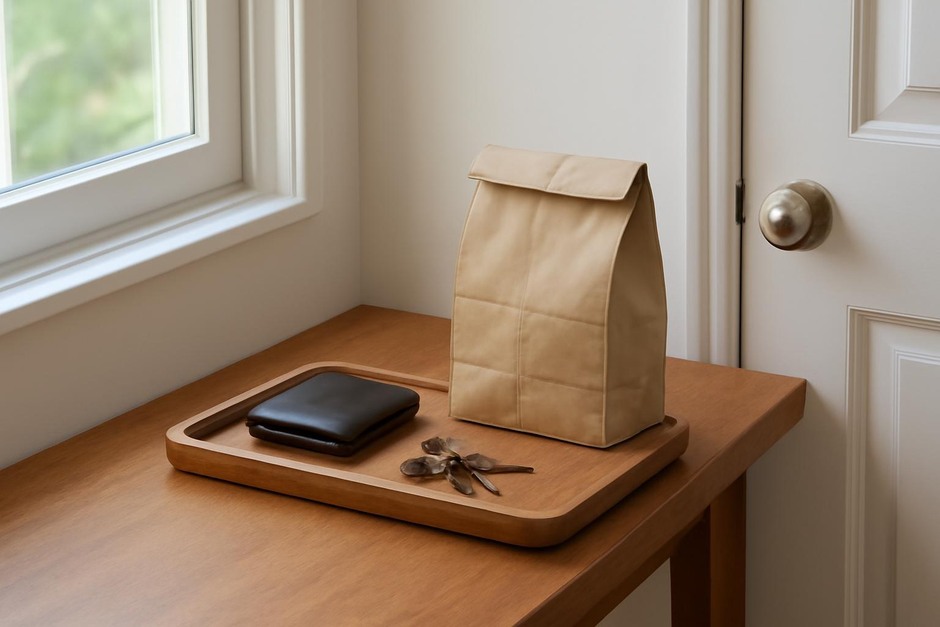
- Clarity: One obvious place. Make it unmistakable where morning items belong. Example: a shallow tray on a console table labeled “Out” for keys, wallet, and phone at eye level.
- Proximity: Close to the exit. Keep the zone near the door you use most. Example: hang a lightweight hook inside a pantry door if the hallway is narrow.
- Standardization: Consistent homes for essentials. Give each category a specific spot—tech, outerwear, bags, consumables. Example: a small basket for reusable water bottles beside a shoe rack.
- Visibility: Make the important visible, the unimportant hidden. Open trays or clear containers for things you must remember; hide clutter in a drawer. Example: a clear zip pouch on the table for transit cards and spare change.
- Low-friction maintenance: Keep upkeep under five minutes. Choose tools and habits you’ll actually use. Example: a single-minute evening check where you drop the packed lunch in its designated bin.
Examples
Here are four small, realistic setups that apply the principles above. Each is intentionally minimal so you can adopt one in under an hour.
1. Studio Apartment: Vertical Prep Pocket
Problem: No hallway table. Solution: Use vertical space beside the door.
- Install a slim wall shelf at chest height for a tray (clarity + visibility).
- Under the shelf, hang two hooks for coat and everyday bag (proximity + standardization).
- Keep a small bowl on the shelf for keys and a folded mask, and a dedicated hook for earbuds.
2. Family Home with Back-and-Forth Traffic
Problem: Multiple people, multiple needs. Solution: Create a communal “launch pad.”
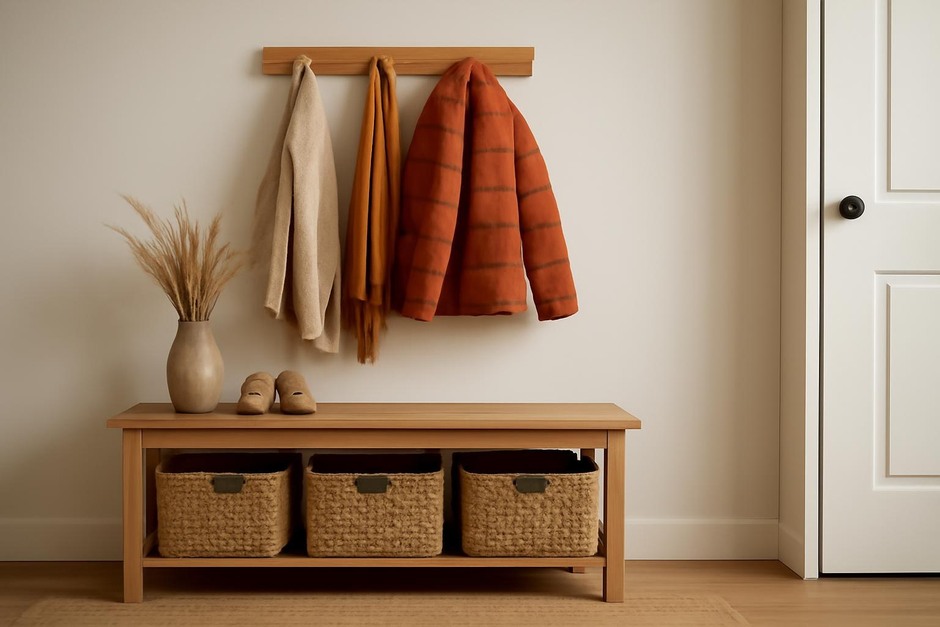
- Choose a low console near the main exit. Use labeled bins—Kids’ Items, Parent Essentials, and Dog Walk—to reduce guesswork.
- Assign a narrow shelf beneath for grab-and-go shoes. Visibility for essentials, hidden shoe storage to reduce clutter.
- End-of-day five-minute family check: everyone places lunch/snacks/backpack in their bin.
3. Shared Apartment: Shared-but-Personalized Tray System
Problem: Shared space, different routines. Solution: Two small trays, one per person.
- Place two trays on a small table by the door, each labeled with a name or color.
- Each tray holds wallet, transit pass, and a compact weather kit (folding umbrella, gloves) so individual needs are clear.
- Agrees on a communal hook for the umbrella to keep the floor dry.
4. Commuter Kit for Vehicle or Bike
Problem: Forgetting commuter essentials. Solution: A grab-bag kept by the door or in the car.
- Choose a small pouch for phone charger, sanitizer, earmuffs or sunglasses, and a spare snack.
- Keep the pouch on a hook near your keys or inside the car’s glovebox with a visible reminder tag.
- Quick weekly swap: refill the snack and check the charger cable.
Practice Checklist
- Pick your primary exit and stand there—what items do you need within arm’s reach? List 3–6 items.
- Choose one surface (tray, shelf, hook) within steps of that exit for your prep zone.
- Assign each essential a specific spot: keys, bag, outer layer, transit items, consumable (snack/water).
- Use an open container for daily items and a closed drawer for spare/backup items.
- Label or color-code if multiple people use the zone.
- Spend 10 minutes to set it up tonight; remove everything that doesn’t belong.
- Do a 60-second evening reset: check bags, refill consumables, hang coat, drop items in trays.
- Review the layout after one week and tweak one thing (move a hook, swap a basket) if you still search.
Small changes to where you keep everyday items have outsized effects on how mornings feel. A mini morning prep zone applies five simple principles, and with one short setup and a quick nightly check you can trade frantic searching for a calm, repeatable departure.