Toy Rotation or Open-Access Bins? Choosing a Simple Playroom Strategy
Two simple approaches to toy management
If toy clutter feels endless, two common strategies tend to work for families: toy rotation and open-access bins. Both aim to reduce visual overwhelm, make play easier, and cut the time you spend tidying. They do this in different ways, so the best pick depends on your space, the children’s ages, and the energy you want to spend maintaining the system.
Toy rotation
Toy rotation means keeping a limited, curated selection of toys available for play while the rest are stored out of sight. After a set period—often a week or two—you swap some items from storage into the play area.
- Benefits: Fewer items visible means less clutter and often longer interest in individual toys. It’s easier for kids to focus and for caregivers to tidy because there’s simply less to manage.
- Downsides: Requires some storage space and a small maintenance habit of swapping and storing items. If rotation is too frequent or poorly organized, it can become another task that’s ignored.
Open-access bins
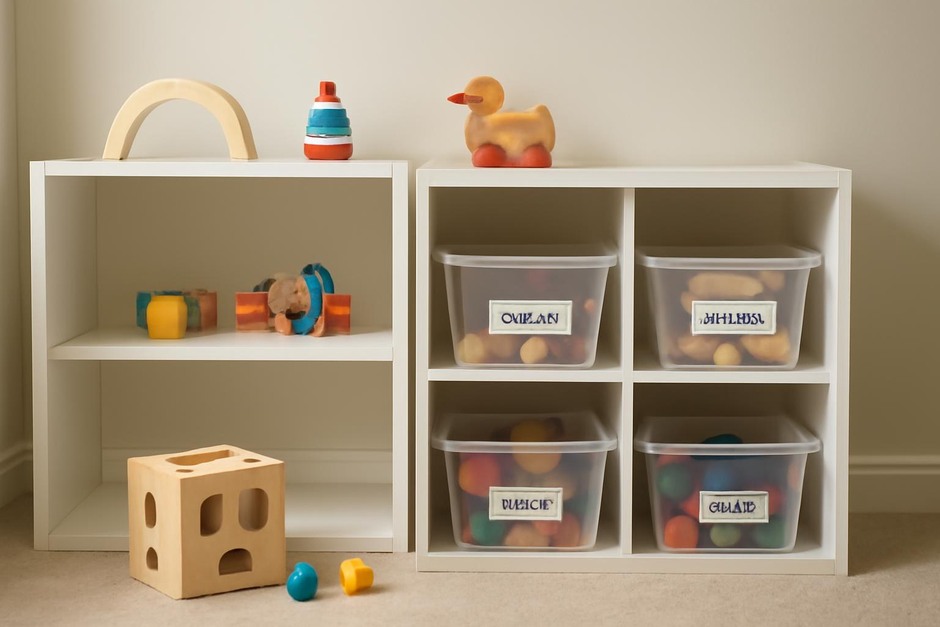
Open-access systems make most or all toys available at any time, typically organized into labeled bins or low shelves. The emphasis is on clear categories and easy cleanup: put blocks in this bin, dolls in that bin.
- Benefits: High accessibility encourages independent play and easy return habits for kids who can match toys to a home. No hidden storage means less time rotating and thinking about what’s “in” or “out.”
- Downsides: When many toys are accessible, visual clutter can grow quickly. Cleanup depends on consistent sorting and may be harder with very young children who don’t yet categorize.
How to choose between them
Ask practical, simple questions about your daily life. These help you match an approach to realistic habits rather than ideals.
- Child’s age and attention span: Younger children (toddlers) often do better with fewer choices—rotation helps reduce overwhelm. Preschoolers and early school-age children who can sort are good candidates for open-access bins.
- Space and storage: If you have a closet or under-bed space to store extras, rotation is feasible. If storage is tight, open-access bins keep everything visible and avoid the need for extra furniture.
- Tidying energy: How much time do you want to spend maintaining the system? Rotation requires a weekly or biweekly swap; bins require daily—or at least nightly—cleanup. Pick the one you can sustain.
- Child involvement: If you want kids to practice decision-making and cleanup, open-access with clearly labeled homes supports that. If you prefer less friction and fewer daily choices, rotation reduces the burden for both of you.
- Household rhythms: Consider whether play happens mainly in one area or moves around. Rotation can be easier when play is contained; bins work better for multi-room, free-flow play if you use portable baskets.
Beginner-friendly routine: a 5-minute evening tidy
Regardless of which approach you choose, a short, consistent nightly habit keeps clutter from piling up. Try this simple routine for the play area. It’s brief, repeatable, and can be done with kids as they grow.
- Set a timer for 5 minutes. Make it a game: everyone tidies until the buzzer.
- Quick sort: Gather stray toys into a central pile. For open-access homes, match each toy to its labeled bin. For rotation homes, sort into “keep out” (currently available) and “store” piles.
- Put things away: Return items to bins or display spots. For rotation: place the “store” pile into a labeled storage bin or shelf and close it away.
- Reset the play surface: Clear one main surface (table or rug). Folding a blanket or straightening a rug counts as reset.
- Celebrate: Do a quick cheer or high-five for finishing—small rewards build habit.
Try the routine for two weeks and notice how it feels. If toys still feel overwhelming, switch strategies: try rotation for a month, or add a weekly sort to open-access bins. The point is not perfection but a reliable system that reduces friction and leaves you with a calmer home.
Small adjustments—consistent swaps, clear labels, or a daily five-minute tidy—make toy management less of a chore and more of a steady, manageable habit.