Three 10-Minute Experiments to Build a Reliable Entryway Habit
Question
How can you create a simple, repeatable habit that keeps the entryway clear without major decluttering or new furniture? Instead of one big overhaul, try three short experiments that build the skill of landing and resetting items as you come and go.
Overview of the plan
Each experiment takes about 10 minutes and focuses on one micro-skill: defining a place, a fast arrival routine, and a short end-of-day reset. Do them in order across three days or back-to-back in one session. After each, pause to note what worked and adjust the next experiment.
Experiment 1: Define the landing zone (10 minutes)
Goal
Create clear, simple boundaries so everything has a place to land for now.
Process (10 minutes)
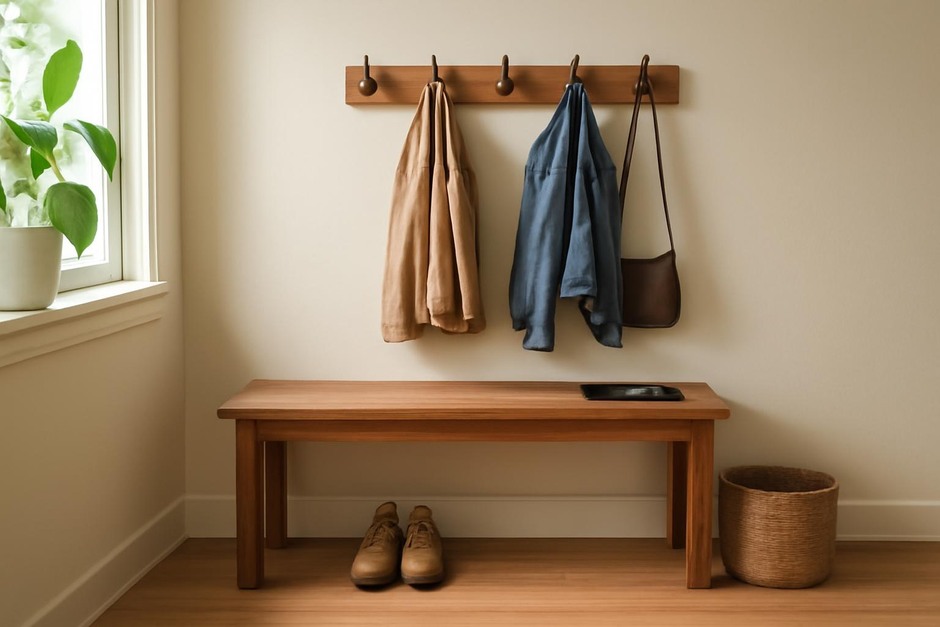
- Stand in the entryway and look for a 2–4 foot zone that feels like the natural drop point (bench, small table, or floor space).
- Choose three landing items to accommodate: keys, bag, shoes. Put each item in a dedicated spot: a small tray or bowl for keys, a hook or bench for the bag, a shoe basket or mat for shoes.
- Label or mentally note the spot: say out loud, “Keys here, bag here, shoes here.”
Quick review
- What felt easy? What felt awkward?
- Is the landing zone visible and reachable as you enter?
- Adjust anything that blocks the flow (a rug that slips, hooks too high).
Experiment 2: The two-minute arrival routine (10 minutes to set up, then try daily)
Goal
Turn the initial drop into an efficient, low-friction habit you can keep doing.
Process (10 minutes)
- Practice an arrival sequence: unlock, walk in, put keys in tray, put bag on hook/bench, kick off shoes onto mat. Time yourself—aim for under two minutes.
- Make one small rule: for example, “No items go beyond the landing zone unless they belong in another room.”
- Prepare a short sign or tape a note for a day: a sticky note that reads the rule or the sequence until it feels automatic.
Quick review
- When you tested the sequence, what slowed you down?
- Was the rule clear enough to stop you from carrying more into the house?
- If shoes are still strewn, consider swapping the shoe basket for a lidded bin to make the drop feel more final.
Experiment 3: The five-minute end-of-day reset (10 minutes)
Goal
Create a short evening habit that resets the landing zone and primes it for tomorrow.
Process (10 minutes)
- Set an end-of-day prompt—this could be after dinner, before bed, or when you prep for tomorrow. Use an existing trigger, like brushing teeth.
- Run a five-step reset: collect any stray items, put non-entry items back in their rooms, check the keys/bag/shoes are in their spots, wipe the tray or bench if needed, and set out one item for tomorrow (e.g., pack a reusable cup or set out shoes).
- Time it. Keep the reset under five minutes. If it takes longer, identify one recurring time sink to change next time.
Quick review
- Did the five steps become easier after each night?
- What single change would make the reset faster tomorrow?
- Celebrate the small win: a clear entryway in the morning is a measurable payoff.
Process notes and iteration
This is a studio-notes approach: try, observe, and tweak. Keep notes on what you tested and what you changed. Examples of quick iterations: swap a tray for a bowl if keys slide off, lower a hook if the bag feels awkward, or add a single shelf for mail if paper consistently accumulates.
Review: What you should get from these experiments
After the three experiments you should have:
- A clearly defined landing zone that fits your actual entryway habits.
- A short, repeatable arrival routine that takes under two minutes.
- An end-of-day reset that keeps the landing zone tidy and reduces morning friction.
Small experiments win because they’re low-commitment and easy to refine. If one approach doesn’t stick, revise one variable and try again for three days. The aim is not perfection but a reliable, gentle habit that keeps your home calmer starting at the front door.