How to Build a Pantry You Can Actually Maintain
A beautiful pantry can be satisfying to look at, but the best pantry is the one that remains useful after a busy week. Containers, labels, and matching baskets are optional. What matters is that you can see what you own, reach common ingredients easily, and notice when something needs replacing.
Before buying any storage accessories, spend a few days observing how you actually use the shelves. Which items are opened every morning? Which ingredients tend to disappear at the back? Which packets are too tall or awkward for the current arrangement? Those answers are more valuable than copying a picture-perfect layout.
Group by routine rather than by appearance
Instead of arranging food only by package type, group it by the moments when you use it. Breakfast items can live together, while baking ingredients can share another shelf. Pasta, rice, grains, and quick dinner staples can form a simple weeknight zone.
This reduces the number of places you have to search while cooking. It also makes restocking easier because related items are already visible together.
Use containers selectively
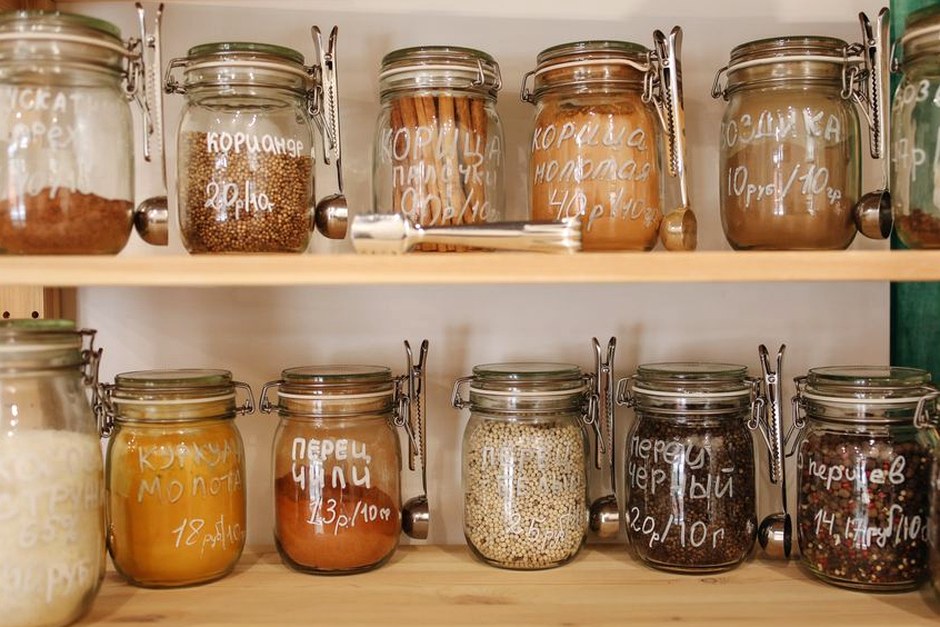
Clear containers are helpful for foods that arrive in awkward bags or that you buy repeatedly, such as oats, rice, flour, or lentils. They are less useful for items that are already easy to stack and identify. A cupboard full of unnecessary containers can create more decanting work than it saves.
If you do transfer food, keep a small label with the product name and any useful date information. The label does not need to be decorative; it just needs to remain readable.
Leave breathing room
A pantry that is packed edge to edge becomes difficult to maintain. Try to leave a little open space on each shelf so you can move things around without taking everything out. One partly empty basket can also serve as a temporary home for new groceries until you have time to put them away properly.
Create a simple refill signal
Choose a point at which an item goes onto the shopping list. For example, add coffee when one unopened bag remains, or add rice when the container reaches the final quarter. This is easier than waiting until something is completely gone.
A small notepad inside the cupboard door works well, but a phone list is equally effective. The important part is having one consistent place to record shortages.
Do a ten-minute monthly edit
Once a month, bring forward anything that has been pushed to the back, wipe one shelf, and remove products you no longer intend to use. There is no need to empty the entire pantry unless it truly needs a deep clean.
A maintainable pantry is flexible. It changes as your cooking habits change, and it should make daily life easier rather than becoming another system you have to manage.