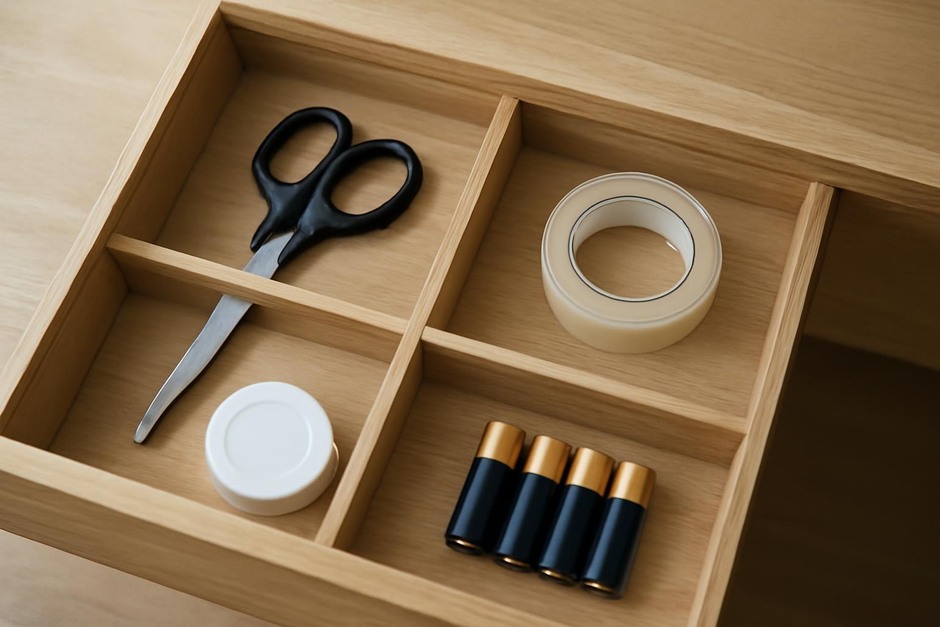
How to Tame the “Everything” Drawer: Principles and Tiny Experiments
Problem
Most homes have one drawer that becomes a magnet for odds and ends — expired coupons, tangled cables, a pile of random screws, spare keys, and a handful of pens that never write. Over time that drawer becomes a black hole: you waste time digging for things, you buy duplicates, and the clutter spreads when you start using the top of the chest and other surfaces as overflow.
The real problem is not the items themselves but how the space is treated: it has no clear purpose, no limits, and no small habits that keep it tidy. That makes it a perfect place for a focused, low‑effort intervention.
Principles
- Define a clear purpose: Give the drawer a short, enforceable description—”small tools and stationery” or “everyday essentials.” If an item doesn’t fit the definition, it doesn’t belong.
- Limit the real estate: Work with the drawer’s actual size. Fewer items that are useful beat a full drawer of rarely used things. Use containment (small trays) to visually limit space for each category.
- Prioritize visibility and access: Store frequently used items at the front and in plain sight. Avoid stacking where things hide beneath each other.
- Make decisions fast: Use simple rules like keep, relocate, or toss. Avoid long deliberation—set a short timer for each batch.
- Design a tiny maintenance habit: A two‑minute nightly or weekly reset prevents relapse. Consistency beats occasional deep cleans.
Examples
Below are three small, time‑boxed experiments that apply the principles above. Try one at a time, track how it feels, and adapt.
1. The 15‑Minute Purge
- Set a timer for 15 minutes. Pull everything out of the drawer and place items on a towel or table.
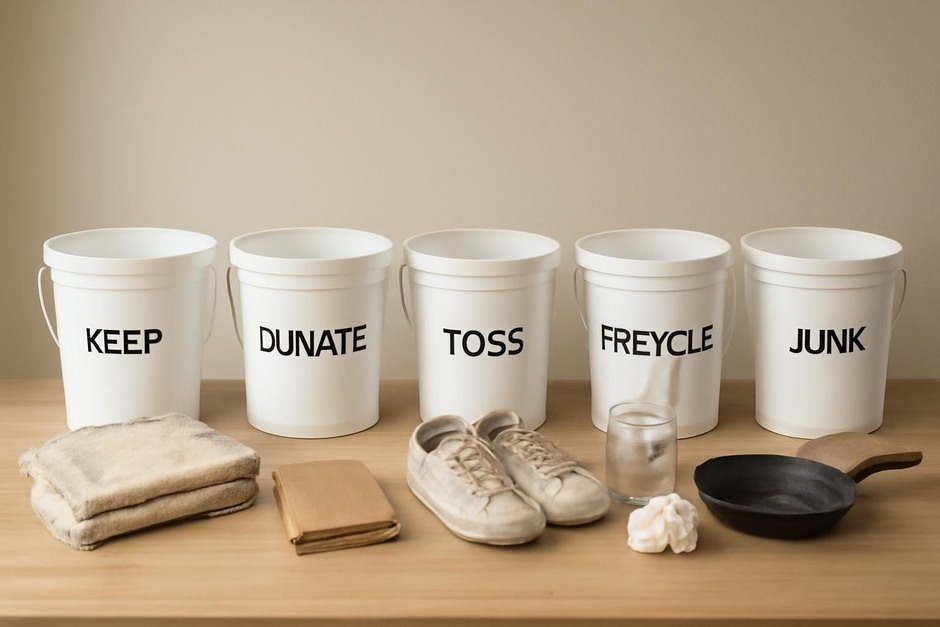
- Quickly sort into three piles: Keep (used often, fits the drawer purpose), Relocate (belongs elsewhere in the house), and Toss/Donate (broken, duplicates, expired). Don’t overthink it; if unsure, relocate for later decision.
- Wipe the drawer bottom. Return only the Keep items. If the keep pile is too big, remove the least useful items until it feels manageable.
2. Zone with Small Containers (30 minutes)
If the purge left a sensible set of items, create visible zones so things don’t drift back into a heap.
- Measure the drawer and choose small containers—ice cube trays, shallow boxes, or purpose‑made dividers. The container size becomes the permission level: one compartment for batteries, one for tape, one for tins with spare screws, etc.
- Place frequently used items toward the front. Use a narrow section for pens and a shallow tray for stickers and stamps.
- Label compartments simply with a sticker or a single word to reinforce the purpose: “Tools,” “Tape & Glue,” “Charging.”
3. The Two‑Minute Nightly Reset
This habit keeps the drawer functioning without another major overhaul.
- Each evening or once a week, open the drawer and return any items that are out of place. Toss obvious trash (receipts, wrappers).
- Replace any empty containers you found elsewhere. If something doesn’t belong, move it immediately to the correct spot or a small “relocate” basket you empty weekly.
- If you notice the keep set creeping upward, do a quick five‑minute edit: remove two items you haven’t used in a month.
Practice Checklist
- Define the drawer’s purpose in one sentence.
- Run a 15‑minute purge this weekend.
- Measure and add small containers to create 3–6 visible zones.
- Label compartments with single words for clarity.
- Do a two‑minute nightly or weekly reset to return stray items.
- Every three months, repeat a 10‑minute review and remove two items you didn’t use.
These steps are small, specific, and repeatable: the combination of a clear purpose, visible zones, and a tiny maintenance habit is what turns a chaotic drawer back into a helpful part of your home.